Azerbaijan National Carpet Museum

Introduction
The Azerbaijan National Carpet Museum, located at 28 Mikayıl Useynov Avenue in Baku, invites visitors into a world where history, art, and tradition intertwine. Nestled along the scenic Seaside National Park, this captivating institution stands as a vibrant tribute to Azerbaijan’s ancient heritage of carpet weaving. Every corner of the museum reflects a commitment to preserving and celebrating a craft that has shaped the nation’s identity. Whether you are a cultural enthusiast or simply curious, the museum promises an enriching experience in the heart of the capital city.

About the Museum
Established in 1967 by a government decree, the museum was first known as the Azerbaijan State Museum of Carpet and Folk Applied Arts. Latif Karimov, a renowned carpet artist and scholar, spearheaded its creation. He ensured that the museum not only collected carpets but also became a hub for studying and understanding their deeper cultural meaning. Originally housed in a historic mosque in the Old City, and later relocated to the former Lenin Museum, the institution found its current home in 2014.
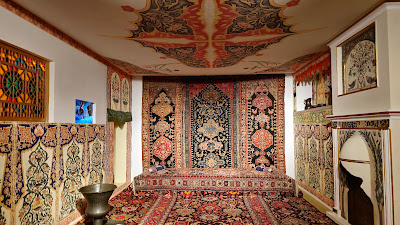
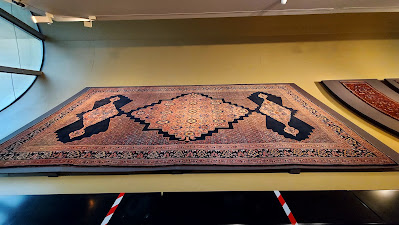
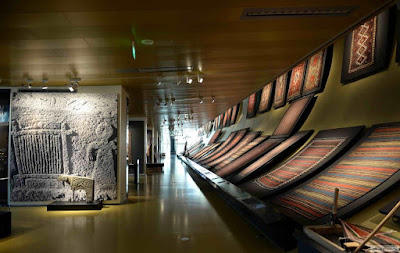
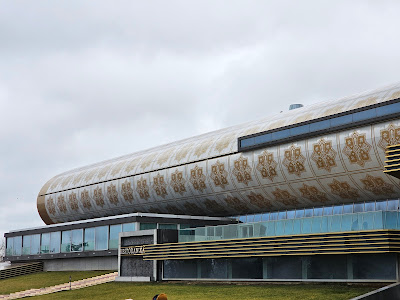
The museum’s striking building—designed to resemble a rolled carpet—is the work of Austrian architect Franz Janz, brought to life by orders from President Ilham Aliyev and supported by the Heydar Aliyev Foundation and UNESCO. Within its walls are over ten thousand artifacts that span centuries: from 14th‑century metalwork and Bronze Age jewellery to exquisite carpets from the 17th through 20th centuries, along with textiles, ceramics, woodwork, and embroidery. These treasures trace Azerbaijan’s rich history, showcasing local design diversity and craftsmanship.
The museum serves as much more than a display space—it is a vibrant cultural centre. It hosts international symposiums, educational workshops, weaving demonstrations, and children’s programs. Innovations such as tactile replicas with Braille labels and audio guides in multiple languages underline a commitment to accessibility and inclusion. Visitors can watch master weavers working at looms, participate in weaving courses, and discover the symbolism behind traditional patterns.
Interesting Facts
- One of the world’s first carpet museums, founded in 1967.
- Architecture inspired by carpets: this four-story structure evokes a rolled rug, symbolising the museum’s essence.
- Latif Karimov’s legacy: the museum honours his work in establishing carpet science and art.
- Largest collection of Azerbaijani carpets: over 10 000 items spanning centuries and art forms.
- Tangible exhibits for senses: tactile carpet replicas, Braille captions, and audio guides make the museum inclusive.
- Children’s Museum Department: offers weaving, puppet and shadow theatre, and design activities for younger audiences.
- International reach: over thirty exhibitions held in countries such as France, Germany, England, Japan, and the Netherlands.
- Home to rare masterpieces: 17th‑century rugs like the Dragon Carpet and Tabriz “Ovchulug”, as well as 18th‑century Khila Afshan carpet.
- Inclusive virtual tours: sign-language translated virtual visits are offered to those with hearing impairments.
- Cultural heritage protected: part of the UNESCO Intangible Cultural Heritage listing since 2010.
Photo Gallery
Physical Location
Contact Details
Phone: +99412 497 2057
Website: azcarpetmuseum.az/
Facebook: facebook.com/pages/Azerbaijan%20Carpet%20Museum/145984012124593/#
Conclusion
The Azerbaijan National Carpet Museum offers a warm and captivating journey through centuries of artistry, culture, and craftsmanship. From its architecturally iconic building to its comprehensive displays, the institution bridges past and present while welcoming diverse audiences through inclusive programming. Whether you are drawn to the vibrant motifs, the rich history, or the hands‑on experiences, a visit here is more than a museum tour—it is an immersion into the soul of Azerbaijani heritage. For anyone visiting Baku, it stands as an essential and inspiring cultural destination.