El Sitio Museo Finca 6

Introduction
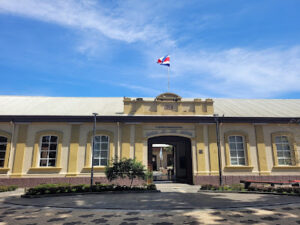
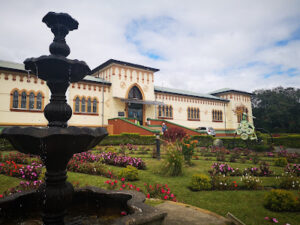
Nestled in the lush southern region of Costa Rica, the Sitio Museo Finca 6 is an archaeological site museum located in Palmar Sur, in the Osa canton, province of Puntarenas. It lies along the road to Sierpe, in the Diquís Delta, making it part of one of the country’s most scenically rich and culturally significant zones. For travelers interested in ancient heritage, indigenous spheres, and immersive history, this museum offers a rare chance to see pre-Columbian structures and stone spheres in their original landscape, as well as learn about the people who once inhabited this land.


About the Museum
Sitio Museo Finca 6 is the second archaeological site in Costa Rica that is open to the public (the first being Guayabo) that combines both conserved residential constructions and stone spheres. Many of the stone spheres here remain in situ—which means they have never been removed since they were discovered—offering visitors a genuine connection to the region’s past.
The site lies on agricultural land covering roughly twenty hectares, about ten of which are dedicated to preserving the most important architectural features. The area is part of an alluvial plain formed by the convergence of rivers Sierpe and Grande de Térraba. Because of sedimentation—due to coastal encroachment and mangrove influences—many of the ancient constructions are buried under about one and a half meters of sediment. This has helped preserve them in good condition.
There are five identified sectors at Finca 6, each showing different aspects of pre-Columbian life and ritual:
- Aligned spheres: Here you will see groups of in situ stone spheres arranged in a plaza-like space. One group of three spheres extends east-west over seventy-seven meters; another group of two spheres lie eleven meters apart. The diameters of these spheres range from about 1.7 metres to 1.9 metres. The spheres are partially buried by sediment but the top portion (the “crown”) remains visible.
- Mounds: Two circular artificial mounds built with cobblestones and pounded earth. These structures have retaining walls made with oblong-shaped boulders in overlying tiers, trapezoidal access ramps, and use of limestone for facing inner sides. One mound features two additional spheres (about 1.1 metres in diameter) placed at the vertices of its ramp. Orientation of the mounds is significant, with one facing the aligned spheres, the other toward Estero Azul (a navigable branch of the Sierpe river).
- Punto 5: This is a sector where large fragments of sculpture and pottery are scattered on the surface. It is thought to have been used in burial practices, though it has suffered disturbance from historical farming activities (especially banana plantation operations) as well as looting.
- Funerary sector: A rectangular grave area built of cobblestones and earth, measuring about seven metres long and 2.3 metres wide. Walls are made with multiple strata of rocks (six tiers), using cobblestones, sedimentary rock and limestone. The interior is paved. This sector is not open to visitors due to preservation reasons.
- Recovered spheres: This section contains over twenty spheres that were not originally on-site (or have unknown original location) but have been recovered by the National Museum of Costa Rica via seizures, court decisions, or returns. The purpose of this sector is educational: it raises awareness of Costa Rica’s archaeological heritage and the importance of preserving objects of cultural significance.
Visitors to Sitio Museo Finca 6 can thus experience both the grandeur of large stone sculptures in their ancient setting and the more subtle traces of everyday life: pottery fragments, architectural foundations, and the interplay between nature and archaeology in a tropical context. The site also offers interpretive material and signage: the aligned spheres sector is a particularly striking highlight, especially during certain times of year when light and solar alignment create special visual effects.
Interesting Facts
- Some of the stone spheres at Finca 6 have remained in their original positions (in situ) since pre-Columbian times.
- The group of three aligned spheres spans about seventy-seven metres from east to west; another pair of spheres are eleven metres apart.
- Sphere diameters in the aligned sector range from approximately 1.7 metres to 1.9 metres.
- One of the mounds contains two additional spheres (around 1.1 metres in diameter) placed at the ramp’s vertices.
- Sedimentation has buried many structures under about one and a half metres of earth, which has helped preserve them over many centuries.
- The funerary sector includes a paved rectangle (about seven by 2.3 metres) with six tiers of rock walls; though important, this area is currently not open to public access.
- The recovered spheres sector showcases over twenty spheres whose origins are unknown but which are used to educate visitors about archaeological heritage and protection.
Photo Gallery


Physical Location
Contact Details
Phone: +50 62 211 5847
Website: diquis.go.cr/en/visite-osa-sitio-museo-finca-6.html
Conclusion
For anyone traveling in Costa Rica who wants to go beyond beaches and wildlife, Sitio Museo Finca 6 is a treasure trove of indigenous history and enigmatic beauty. It offers a chance to walk among stone spheres arranged in ancient plazas, to imagine the people who built these mounds and graves, and to appreciate how nature and time have both preserved and revealed these wonders. Whether you are an archaeology enthusiast, curious traveler, or someone seeking a deeper cultural connection in Central America, Finca 6 is worth setting aside time for. It is not just a museum: it is a living link to past civilizations, and a reminder of the value in caring for our shared heritage.