Fortress of Louisbourg National Historic Site

Introduction
The Fortress of Louisbourg National Historic Site is a beautifully reconstructed 18th-century French colonial town, located on Cape Breton Island’s eastern coast in Nova Scotia, Canada. The fortress lies on the southeast edge of Louisbourg Harbour, adjacent to the Atlantic Ocean. It offers visitors an immersive journey into the past: military fortifications, civilian houses, gardens, costumed interpreters, and original ruins combine to bring alive a society from more than 250 years ago. Whether you come to wander along cobblestone streets, dine using historic recipes, or sleep inside period-style buildings, this site offers a rich experience for history lovers, families, and anyone interested in colonial and maritime heritage.


About the Museum
The Fortress of Louisbourg National Historic Site is much more than a museum in a single building; it is a reconstructed town and fortress complex, with many buildings, gardens, exhibits, trails, and immersive programs. Parks Canada manages the site. Visitors are encouraged to plan at least one full day—or more—to explore its many offerings.
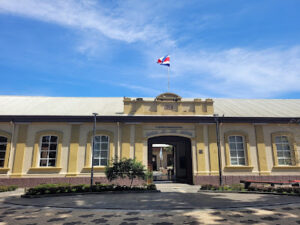
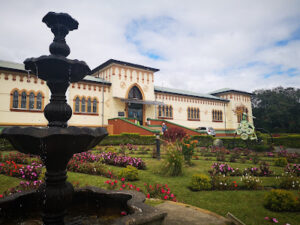
Inside the reconstructed area you will find houses, administrative buildings, military fortifications, stores, bakeries, and public spaces, all built or rebuilt to reflect what Louisbourg was like just before its first siege in the 1740s. The buildings are furnished with period objects; much is based on archaeological findings, archival documents, maps, and plans. The town streets, gardens, and even the costumes of many of the interpreters are designed to be as authentic as possible.
There is also a Mi’kmaw Interpretive Centre which helps visitors understand the Indigenous heritage of Unama’ki (Cape Breton Island), including the history of the Mi’kmaw people and their relationship with the land. Visitors can walk trails outside the fortress walls, enjoy views of rugged coastline, and explore ruins that were never reconstructed. For those who wish to extend their stay, there are overnight accommodations inside historic-style buildings, camping, and options to “wake up in the past.”
Practical services are also well provided: visitor centre with maps and guides, food service in various reconstructed houses and inns, gift shops, accessible facilities where possible, and staff who provide guided tours and interpretive programs.
Interesting Facts
- The site is the largest reconstructed 18th-century French fortified town in North America.
- Parks Canada has reconstructed approximately one quarter of the original walled townsite (between 1961 and 1981), using archaeological foundations and archival information to guide reconstruction.
- Archaeologists have uncovered over 69,000 fragments of Chinese porcelain from Jingdezhen at the Fortress, revealing international trade and sophisticated taste among the inhabitants.
- Many buildings within the reconstructed town are furnished using a mix of original artefacts, antiques, and quality reproductions to reflect daily life in the 1740s.
- Costumed interpreters bring the town to life: many staff wear period-style clothing, and they demonstrate crafts, trades, cooking, and daily routines from the colonial era.
- You can stay overnight in period-style buildings, including a guardhouse, Lartigue House, or even in the prison, and receive a camping kit. These experiences allow you to see the fortress after hours, often with few people around.
- The weather can be changeable due to the coastal location. Even on hot sunny days, wind and fog can roll in, so visitors are advised to dress in layers and bring waterproof footwear. Many walking and hiking trails include rough terrain, stone, or loose gravel.
Photo Gallery


Physical Location
Contact Details
Phone: +19 02 919 8392
Website: parks.canada.ca/lhn-nhs/ns/louisbourg
Facebook: facebook.com/FortressOfLouisbourgNHS/
Conclusion
The Fortress of Louisbourg National Historic Site is a living history destination that offers much more than static displays. It invites you to step back in time, not merely to observe, but to experience: the smells and sights of an 18th-century town, the voices of interpreters in costume, the light at dawn from the Atlantic, and the rugged beauty of Nova Scotia’s coastline. Whether your interest lies in military history, colonial commerce, the arts, or Indigenous heritage, you will find meaningful insight and vivid stories here. When you plan your visit, allow enough time to savour both reconstructed and original ruins, to dine on historic recipes, and perhaps to spend a night inside the fortress itself. It is a place that educates, inspires, and stays with you long after you leave the walls behind.