Juan Santamaria Historical Cultural Museum

Introduction
The Museo Histórico Cultural Juan Santamaría is a must-visit destination for anyone travelling to Alajuela, Costa Rica. Situated in the historic heart of Alajuela, this museum is dedicated to telling the story of a defining moment in Costa Rican history, and of the national hero after whom it is named: Juan Santamaría. Visitors will find themselves stepping into one of the country’s most evocative heritage sites, where history, culture, art, and patriotism come together. Whether you are drawn to military history, architecture, art, or simply wanting to connect with Costa Rica’s national identity, this museum offers an enriching experience.


About the Museum
The Museo Histórico Cultural Juan Santamaría was established with the purpose of preserving and sharing the history of the National Campaign of 1856-1857, the conflict fought by Costa Rica against William Walker’s filibusters. The museum honours Juan Santamaría, born in Alajuela, who is revered for his heroic act in the Battle of Rivas on April 11, 1856. In that event, he volunteered to set fire to enemy strongholds, an act that helped bring about victory, although he lost his life in the process.
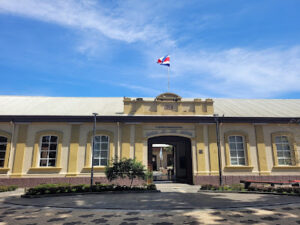
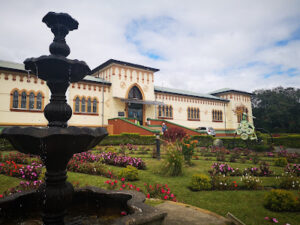
The museum is housed in an architecturally significant building: the former Arms Barracks and the old Alajuela prison, built in 1874, which later became government-owned, went through various uses, and is now preserved as a national patrimony site. Its neoclassical architecture provides a stately backdrop for its exhibits.
Inside, the museum’s collection covers a range of materials. You can expect to see paintings (including works by both local artists and at least one famous painting by Spanish painter Tomás Povedano depicting Juan Santamaría setting fire to the war fortress), maps, uniforms, historical artefacts from the Filibuster War, documents, numismatics, collections of books, magazines, newspapers, and other items illustrating the broader history of Costa Rica around that period.
In addition to its permanent displays, the museum offers temporary exhibitions, an auditorium for cultural events such as lectures, concerts, speechmaking, and other activities. The museum also has an inner courtyard and rooftop views, from which visitors can see parts of Alajuela: its central park, the cathedral, and surrounding mountains.
Practical visitor information: the museum is free to enter; it is open from Tuesday through Sunday, generally from nine in the morning until five in the afternoon (some sources say until five-thirty), and closed on Mondays.
Interesting Facts
- The museum’s building was originally built in 1874 as the Cuartel de Armas (Arms Barracks) and was later used as a jail for Alajuela. It is a protected historical architectural site.
- Juan Santamaría, the museum’s namesake, was born in Alajuela in 1831 and died on April 11, 1856, during the Battle of Rivas, when he volunteered to set fire to the enemy’s war fortress. His act has become a symbol of national heroism in Costa Rica.
- One of the most famous artworks in the museum is the painting by Tomás Povedano that depicts Juan Santamaría lighting the war fortress (“Quema del Mesón de Guerra”).
- The museum hosts both permanent collections and rotating (temporary) exhibitions, which means that on any given visit there may be a special show by a local artist or one exploring themes beyond just the Filibuster War.
- From the rooftop of the museum, visitors can enjoy panoramic views of Alajuela: the Central Park, the cathedral, and the surrounding mountains provide a scenic backdrop that complements the historical interior.
Photo Gallery


Physical Location
Contact Details
Phone: +50 62 441 4775
Website: museojuansantamaria.go.cr/
Facebook: facebook.com/museosantamaria.mcj.cr/
Conclusion
The Museo Histórico Cultural Juan Santamaría offers more than just a walk through artefacts and exhibits; it delivers an emotional connection to Costa Rica’s history and national identity. Its collections, its architecture, and its commitment to preserving the memory of Juan Santamaría and the events of the mid-nineteenth century make it a powerful place to learn, reflect, and be inspired. For travellers to Alajuela, or anyone seeking to understand Costa Rican cultural heritage, this museum is a rich and accessible experience. Because entry is free and the location is central, there is little barrier to bringing friends, family, or visitors to share in its stories. If you have the opportunity, plan to spend at least an hour exploring its rooms, enjoying its art, admiring its views, and absorbing the courage and spirit the museum embodies. You will leave with a deeper appreciation for the past, and a better sense of the pride that shapes Costa Rica today.