Museu Nacional de Belas Artes de Cuba

Introduction
The Museo Nacional de Bellas Artes de Cuba is one of Havana’s most treasured cultural institutions. Located in the heart of Cuba’s capital, it offers visitors a journey through the history of Cuban art, alongside works from around the world. With its two main buildings, one devoted to national Cuban art and the other to universal art, the museum stands as a must-see destination for art lovers, history enthusiasts, students, and anyone curious about the visual legacy of Cuba.


About the Museum
Museo Nacional de Bellas Artes de Cuba holds one of the most significant art collections in Latin America and particularly in the Caribbean. The museum’s holdings include more than 30,000 pieces of Cuban visual arts, which include paintings, sculptures, drawings, engravings, photographs, and installations. Its permanent display of Cuban art is comprised of approximately 940 works organised into four conceptual nuclei: Arte en la Colonia (Art in the Colonial Period), Cambio de Siglo (Turn of the Century), Arte Moderno (Modern Art), and Arte Contemporáneo (Contemporary Art).
The museum also houses a universal art collection: paintings, sculptures, engravings and drawings from various geographical and historic origins. This includes European painting (for example from the Renaissance, the Baroque, nineteenth-century France), colonial Latin America, North America, Asia and other regions.
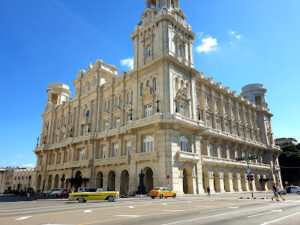
The Museo Nacional de Bellas Artes is housed in two main buildings. One building is dedicated to Cuban art; the other to universal / international art. The building for Cuban art (often called Palacio de Bellas Artes) presents works from colonial times to the present, including religious art, landscapes, costumbrismo (scenes of everyday life), and modern and contemporary works. The other building (Palacio del Centro Asturiano) contains the universal collection, with art from ancient civilizations, European masters, Latin American colonial works, and more.
In addition to its permanent exhibitions, the museum offers temporary exhibitions, educational programs, guided tours, a library specialised in plastic arts (art, sculpture, drawing, etc.), shops, and cafés. Visitors can explore the museum’s offerings through its website, plan their visit, and learn about current exhibitions.
Architecturally, the two buildings are historically and aesthetically interesting. The Palacio del Centro Asturiano was originally built in 1927 in a style that reflects the republican era’s eclectic architecture. The Palacio de Bellas Artes (Cuban Art building) underwent renovations to modernise its interiors and today provides flexible exhibition spaces, a central courtyard where sculpture is displayed, and integration of architectural and sculptural elements.
Interesting Facts
- The permanent Cuban art collection is organized into four distinct periods: Colonial, Turn-of-the-Century, Modern, and Contemporary, offering a clear narrative of artistic evolution on the island.
- The universal art building features works from ancient times up through major European schools, colonial Latin America, and Asia, giving visitors a broad survey of world art.
- The museum holds more than 30,000 Cuban artworks in its heritage collection (though not all are on permanent display).
- The architecture of the two main buildings illustrates different eras and styles: the Palacio del Centro Asturiano, with its republican era eclecticism, and the Palacio de Bellas Artes, with modern exhibition design and a central courtyard for sculpture.
- As part of its visitor services, the museum offers guided tours, educational programs, temporary exhibitions, a library and documentation centre, shops, and cafés.
Photo Gallery


Physical Location
Contact Details
Phone: +53 78 63 3763
Website: bellasartes.co.cu/
Facebook: facebook.com/bellasartescuba/
Conclusion
A visit to the Museo Nacional de Bellas Artes de Cuba is more than a glance at paintings on walls; it is an encounter with the soul of Cuban visual culture, entwined with influences from around the world. For a visitor in Havana, this museum offers a rich, layered experience: from colonial times to vibrant modern and contemporary expressions; from sculptural courts to quiet galleries of European masters. Whether one is drawn by the story of Cuba’s artists, by universal themes rendered beautifully, or by architecture and ambience, this museum delivers.
If you plan to visit, take enough time to explore both buildings, attend a guided tour if possible, and linger in the courtyards and cafés for moments of reflection. The Museo Nacional de Bellas Artes de Cuba stands as a beacon for art, history, and beauty—and it is well worth making part of your travel itinerary.