Armenian Genocide Museum

Introduction
The Armenian Genocide Museum‑Institute is located in Yerevan, Armenia, within the Tsitsernakaberd Memorial Complex on the hill overlooking the city and Mount Ararat. This museum offers visitors a deeply meaningful and thoughtfully designed journey through the history of the Armenian Genocide. Visitors to Yerevan who wish to gain understanding and reflection will find that the Museum‑Institute presents its exhibitions in a respectful and positive atmosphere of remembrance and learning.

About the Museum
The Armenian Genocide Museum‑Institute opened in 1995, coinciding with the eightieth anniversary of the genocide. Its striking two‑story structure is built into a hillside beneath the Genocide Monument, maintaining harmony with the memorial while offering panoramic views from its flat rooftop across the Ararat Valley and Mount Ararat. The first level of the museum is mostly subterranean and houses administrative offices, the Komitas Hall conference room (which seats around 170 people), a library, a reading hall, and storage for archival materials. Exhibition space is located on the second floor, covering over 1000 square meters, and includes three indoor exhibition halls plus an outdoor gallery hall.
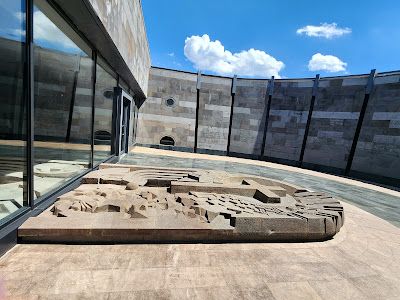
Inside, the exhibitions lead visitors through life before the genocide, the unfolding atrocities, and the global response and legacy. The first exhibit hall features a massive engraved stone map nine by five metres in size, showing the Armenian Plateau and pre‑1915 Armenian settlements, along with photographs and data illustrating Armenian life prior to the genocide. The second hall contains eyewitness reports, archival documents, photographs taken during 1915–1917, portraits of affected individuals, and documentary film materials. The third hall presents comparative statistics of Armenian population figures from 1914 and 1922, documents issued by international bodies condemning the genocide, and symbolic installations such as granite pedestals holding earth from historic Armenian regions and a basalt tree symbolising rebirth.
The outdoor gallery is designed like a traditional Armenian courtyard, featuring a semicircular basalt wall inscribed with statements from foreign scientists, writers and diplomats condemning the genocide, forming a symbolic courtroom where visitors are invited to bear witness and reflect. The museum also includes the Jean Jansem Gallery, named after the French‑Armenian painter, which hosts rotating temporary exhibitions on art, identity and memory.
Beyond exhibits, the Institute functions as a research centre with departments dedicated to history, documentation, comparative genocide studies, collections and public affairs. It publishes scholarly journals—including the International Journal of Armenian Genocide Studies—and provides educational programmes for schools and teacher training.
Interesting Facts
- The museum is free to enter; guided tours are available in Armenian, Russian, English, French and German for a modest fee, and must be booked in advance.
- Architectural design is intentional: the museum is partially underground and built into the hill so as not to compete with the monument above, while the rooftop offers a contemplative view of Mount Ararat.
- The Komitas Hall on the first floor can seat approximately 170 people and supports conferences, lectures and educational events.
- The engraved stone map in the first exhibition hall measures about nine metres wide and five metres tall, and depicts historic Armenian lands and settlements as they stood before 1915.
- One hall includes a basalt tree sculpture and granite vases containing soil from historic Armenian regions such as Karin (Erzerum), Van and Sebastia, symbolising life, loss and renewal.
- The outdoor gallery’s semicircular basalt wall is inscribed with statements by international figures condemning the genocide, inviting visitors to reflect as though in a tribunal.
- The museum’s research institute carries out academic studies, publishes journals and books, and conducts educational outreach both in Armenia and internationally.
Photo Gallery


Physical Location
Contact Details
Phone: +3741 039 1412
Website: genocide-museum.am/eng/index.php
Facebook: facebook.com/armeniangenocidemuseum/reels/?_rdr
Conclusion
Visiting the Armenian Genocide Museum‑Institute in Yerevan offers a moving, respectful, and deeply informative experience. The carefully curated exhibitions guide visitors from before the tragedy through its unfolding and into the broader context of remembrance and justice. The design of the museum itself fosters reflection, connecting visitors with the landscape and symbolism that are central to Armenian identity. Whether you explore independently or join a guided tour, the Museum‑Institute offers resources both for casual visitors and for scholars seeking a deeper understanding of genocide and its echoes today.
The museum’s combination of powerful exhibits, architectural symbolism, and educational mission makes it a must‑visit. It stands as a testament to the resilience of the Armenian people and as an invitation to all visitors to engage thoughtfully with history—and to carry forward a commitment to memory, learning and human dignity in our own time.