Complejo Arqueologico El Brujo – Museo Cao

Introduction
The Complejo Arqueológico El Brujo – Museo Cao, located in the district of Magdalena de Cao in the province of Ascope, department of La Libertad in northern Peru, offers a remarkable journey through the rich heritage of pre-Hispanic civilizations. Nestled approximately sixty kilometers north of the city of Trujillo, this extraordinary archaeological complex invites visitors to step into millennia of history and discover the cultural legacy of the Moche and earlier societies. At the heart of the complex stands the Museo Cao, a modern site museum that brings to life the mysteries of a remarkable female ruler known as the Lady of Cao.


About the Museum
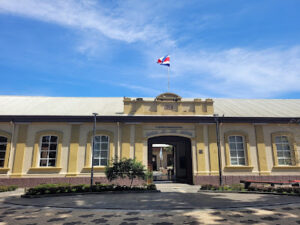
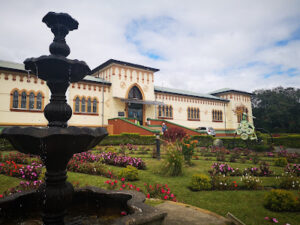
Situated within the broader El Brujo Archaeological Complex, the Museo Cao is a specially designed site museum that showcases the discovery of the Lady of Cao and numerous archaeological treasures from Huaca Cao Viejo. The museum opened its doors on 2 April 2009, and its layout comprises a sequence of six exhibit rooms arranged as a vertical progression from the entrance to the final chamber, which houses the preserved remains of the Lady of Cao.
In a broader account from reputable sources, the museum actually includes seven rooms showcasing the Moche culture’s development, the legacy of the Lady of Cao, and various cultural themes. Within the museum infrastructure, visitors will also find an exhibition hall, an auditorium for educational presentations, a meeting room, a laboratory, and a computing facility used by archaeologists.
The museum narrative begins in Room 1, titled “Todas las Aguas” (“All the Waters”), presenting the connection between the ancient inhabitants and the natural environment, including myths and relationships with rivers, lagoons, and the sea. Room 2, often described as covering “14 000 years of history”, displays ceramics, textiles, basketry, and other artifacts arranged chronologically to reflect cultural change and continuity. In Room 3, “Architecture of the Cosmos”, the focus is on the sacred nature of Huaca Cao Viejo and the ritual significance embedded in its construction, with infographics explaining its ceremonial architecture and offerings.
Further galleries explore funerary rituals, particularly those surrounding the burials in Huaca Cao Viejo, including details about Moche beliefs in the afterlife. Additional rooms highlight ancestor veneration and display an exquisite collection of gold, silver, semi-precious stones, and shell jewelry associated with the Lady of Cao. The final room is dedicated to the Lady of Cao herself, featuring a three-dimensional reconstruction of her face, a replica of her mummified body, and in some cases the original mummy preserved in a protective enclosure.
Through its thoughtful design, the museum not only protects these treasures but also provides visitors with profound insight into Moche society and the extraordinary status of a woman leader who challenges long-held historical assumptions.
Interesting Facts
- The Lady of Cao is a Moche woman leader whose mummified remains are remarkably well preserved; her discovery offers rare evidence that women held high authority in pre-Inca society.
- The museum was inaugurated on 2 April 2009 and originally featured six rooms, while other sources note a display spanning seven thematic galleries.
- Room One, named “Todas las Aguas” (“All the Waters”), invites visitors to explore the vital relationship between the ancient inhabitants and their natural surroundings.
- Room Two covers approximately 14,000 years of history, showcasing artifacts such as ceramics, textiles, and basketry in chronological order.
- In Room Three, the theme of “Architecture of the Cosmos” reveals the ritual significance of Huaca Cao Viejo, including construction phases and ceremonial offerings.
- One gallery presents Moche funerary rituals, displaying tomb contexts and illuminating beliefs about the afterlife.
- A room dedicated to the Lady of Cao includes a 3D facial reconstruction, a replica of her mummified body, and potentially the original mummy preserved in a secure space.
- The El Brujo Archaeological Complex comprises three main huacas: Huaca Cao Viejo (site of the discovery), Huaca Cortada, and Huaca Prieta, reflecting multiple cultural phases from pre-ceramic to Moche and beyond.
Photo Gallery


Physical Location
Contact Details
Phone: +51 93 341 2730
Website: elbrujo.pe/
Facebook: facebook.com/ComplejoArqueologicoElBrujo
Conclusion
The Complejo Arqueológico El Brujo – Museo Cao offers a captivating and enlightening experience for all visitors. From the moment one steps into the museum, a narrative unfolds that spans thousands of years—bringing to life the profound relationship between ancient cultures and the natural world, the evolution of society across time, and the sacred architecture of the Moche civilization. At its culmination stands the Lady of Cao herself—a powerful testament to female leadership and cultural complexity in pre-Hispanic Peru.
With its thoughtfully curated exhibition spaces, the museum creates an immersive atmosphere that educates and inspires. It not only preserves invaluable artifacts but also invites us to reflect deeply on the lives, rituals, and beliefs of those who came before. For anyone intrigued by archaeology, history, and the role of women in ancient societies, a visit to the Museo Cao at El Brujo is an unforgettable encounter with Peru’s ancient legacy.