Ha’amonga’a Maui Trilithon

Introduction
Visiting the Ha’amonga ‘a Maui Historical Park in Tonga, on the island of Tongatapu, offers an unforgettable encounter with one of the Pacific’s most iconic monuments. The Ha’amonga ‘a Maui Trilithon stands proudly near the village of Niutōua in the Heketā district. This ancient stone structure commands attention at roughly five point two metres in height, and invites visitors to step into Tonga’s rich cultural and historical heritage.

About the Museum
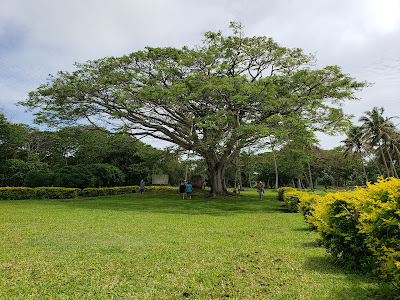
The Ha’amonga ‘a Maui site is presented within a historical park setting that provides interpretive panels and a well‑maintained grounds to enhance the experience. Visitors can walk up to the massive coral limestone trilithon—a structure built in the thirteenth century by the eleventh Tu’i Tonga king, Tuʻitātui, as a ceremonial gateway to his royal compound Heketā.
Three enormous coral limestone slabs form the trilithon: two upright posts supporting a lintel. Each upright stone weighs approximately thirty to forty tonnes, and the structure measures about five point two metres tall, one point four metres wide, and five point eight metres long.
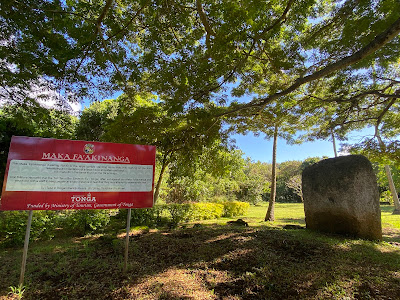
Interpretive signs around the site explain the monument’s historical and mythological importance, including its connection to the legendary cultural hero Maui. As visitors stroll the park, they may also explore the nearby ʻEsi Maka Faakinanga, a large stone seat traditionally believed to have functioned as the king’s throne, offering protection against assassination from behind while he presided over his people.
Guided or self‑guided visits often include opportunities for photography, quiet contemplation, and appreciation of traditional Tongan architecture and design exhibited on‑site.
Interesting Facts
- The name Ha’amonga ‘a Maui means “the burden of Maui,” referencing a myth in which the demigod Maui carried the stones across the ocean to Tonga.
- The structure is sometimes called the Stonehenge of the Pacific, due to its trilithon form and possible astronomical alignments.
- The upright stones are believed to symbolize the king’s two sons, and the lintel above them is said to represent the bond between the brothers—a reminder for unity after their father’s death.
- In nineteen sixty‑seven King Taufa’ahau Tupou IV proposed that notches carved on the lintel mark the directions of sunrise at solstices and equinoxes, suggesting the site may have served as a kind of solar calendar, though scholars remain undecided.
- The stone throne ʻEsi Maka Faakinanga, located nearby, is sculpted with an indentation resembling the king’s back, shoulders, and head—and is believed to have provided him security while seated with his back protected.
Photo Gallery
Physical Location
Contact Details
Website: worldhistorycommons.org/haamonga-maui-tonga
Facebook: facebook.com/profile.php?id=100067197215662
Conclusion
A visit to Ha’amonga ‘a Maui Historical Park offers more than just seeing an ancient stone structure. It is an immersive journey into Tongan history, mythology, and ancient engineering. The sheer scale of the limestone slabs, the carefully preserved interpretive panels, and the serene park environment invite visitors to pause and reflect on Tonga’s royal origins and cultural beliefs.
Whether you arrive at sunrise to view light filtering between the stones, imagine the legendary Maui’s labours, or simply relax by the ʻEsi Maka Faakinanga, the experience leaves a lasting impression. The Ha’amonga ‘a Maui Trilithon stands as a magnificent symbol of Tonga’s enduring heritage—grounded in tradition, yet accessible to the curious traveler of today.