History Museum of Armenia

Introduction
The History Museum of Armenia, located at Republic Square 4 in Yerevan, is one of the most important cultural institutions in Armenia. Situated in the architectural ensemble of Yerevan’s Republic Square, it stands as a monumental symbol of national heritage. This museum offers visitors an immersive journey through Armenian history, from prehistoric times to the modern era, all under one roof in the heart of the capital.
About the Museum
Founded by a decree of the Parliament of the First Republic of Armenia on September 9, 1919, the museum first opened to the public on August 20, 1921. It began as the Ethnographic‑Anthropological Museum‑Library and underwent several name changes over the decades, including State Central Museum of Armenia, Cultural‑Historical Museum, Historical Museum, State History Museum of Armenia, and finally adopting its current name in 2003.
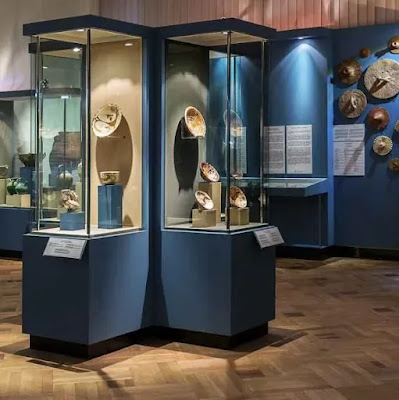
The museum is entrusted with a national collection of around 400,000 objects, encompassing archaeological, ethnographic, numismatic and documentary holdings. Its wide‑ranging exhibition presents a coherent narrative of Armenian culture and history, extending from prehistoric times—about 1.8 million years ago—to the present day.
Permanent galleries are organized in chronological order. Visitors progress through halls devoted to the Stone Age, Bronze Age, Iron Age, the Urartian period, Ancient Armenia and Christian Armenia, with each section clearly titled to reflect its theme. The museum also presents connections between Armenian civilisation and the ancient Near Eastern powers—Egypt, the Hittites, Assyria, Persia, the Seleucids, Rome and Byzantium.
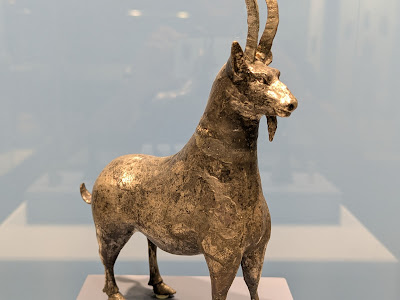
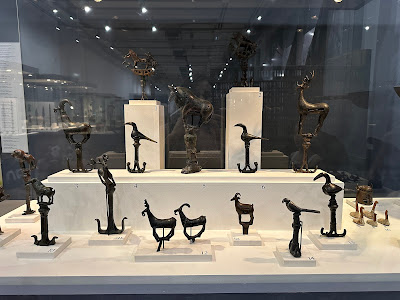
The archaeological department contains exceptionally rare Bronze Age artifacts, including bronze statuettes, wall paintings, decorated ceramics, weapons and ornaments from Urartu excavations at sites such as Erebuni, Argishtikhinili and Teishebaini. Among these is the cuneiform inscription dated to 782 BC, recording the founding of the city of Erebuni (the ancient name of Yerevan) by King Argishti I.
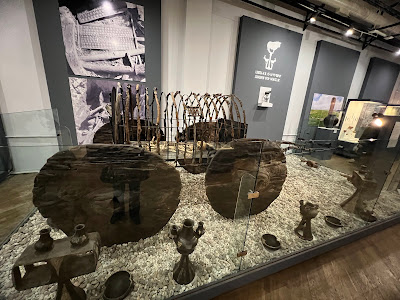
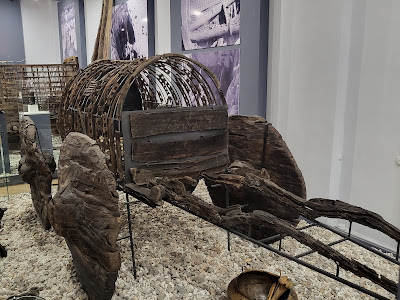
Another highlight is the remarkable 15th–14th century BC wooden carts and chariots, excavated at Lchashen, often displayed with their miniature bronze models, demonstrating early transport technology in the region. The ethnographic department showcases historic traditional crafts—such as coppersmithing, wood‑working, weaponry, textile arts and photographic archives, while the numismatic department houses a rich collection of Armenian and foreign coins, including those from the Tsopk, Artaxiad, Kiurike and Cilician Armenian kingdoms.
The documents department includes photographs, seals, flags, personal archives and lithographic prints reflecting Armenia’s more recent history. The museum also carries out active conservation and restoration work, and has published scholarly works on archaeology, architecture, ethnography and history since 1948.
Guided tours are available in Armenian, Russian, English, French, German and Italian, covering the entire museum exhibition. Admission fees and tour prices are clearly stated on the museum’s website, and visitors may book online or at the ticket desk.
Interesting Facts
- The museum’s collection totals approximately 400,000 objects, making it the national repository of Armenian heritage.
- It features the world’s oldest known leather shoe, dated to about 3,600–3,500 BC, discovered in the Areni‑1 cave complex near the village of Areni.
- A rarely displayed cuneiform inscription inscribed in 782 BC recounts the founding of Erebuni by King Argishti I, an artifact of profound national significance.
- The museum holds wooden chariots and carts from the 15th–14th century BC, found in Lchashen, showcasing early Armenian transport technology, plus miniature bronze replicas of them.
- The Urartian collection is unmatched in its richness—bronze statuettes, inscriptions, weapons, ceramics, wall paintings, and precious metal objects from major archaeological sites in the Armenian Highlands.
Photo Gallery
Physical Location
Contact Details
Phone: +3741 058 2761
Website: historymuseum.am/
Facebook: facebook.com/HistoryMuseumofArmenia/?ref=hl
Conclusion
The History Museum of Armenia in Yerevan offers a compelling and inspiring experience. Under one impressive roof, visitors encounter the story of Armenia—from stone‑age tools and chalcolithic leather shoes to coins, manuscripts, armaments and medieval Christian relics. Guided tours in multiple languages bring context to each exhibit, making history accessible to all. The museum’s ongoing commitment to research, restoration, and publication ensures that every visit is both educational and enlightening.
For anyone interested in archaeology, culture, numismatics, ethnography or simply the story of a resilient nation, a visit to this museum is a journey through millennia. It invites you to walk in the footsteps of ancient civilisations and discover the continuous thread of Armenian identity.