Imperial Museum

Introduction
The Imperial Museum (Museu Imperial) is located in the historic centre of Petrópolis, in the state of Rio de Janeiro, Brazil. Housed in the former summer residence of Emperor Pedro II, this neoclassical palace welcomes visitors into a world of Brazilian imperial heritage with elegance and authenticity.


About the Museum
The Imperial Museum occupies the former Petrópolis Imperial Palace, whose construction began in 1845 under the guidance of Emperor Pedro II and concluded in 1862. Originally built as the emperor’s preferred summer residence, its facades, exquisite stone floors, richly decorated rooms, and period furniture reflect the grace of nineteenth‑century architecture and design.
Inside, visitors may explore an extraordinary collection of artworks, personal items, documents, and furnishings. Notable highlights include imperial crowns, including that of Pedro I and Pedro II; the golden pen used by Princess Isabel to sign the Golden Law abolishing slavery; and magnificent ornamental sets, such as trophies and necklaces that belonged to members of the imperial family. The museum also features richly furnished state rooms, such as the dining room, music hall (with original instruments including a golden harp and a rare spinet), state hall (with throne and Sèvres porcelain), Emperor Pedro II’s office (with his telescope, early telephone, chaise‑longue, and portraits), the princesses’ quarters, and the Empress’s parlour.
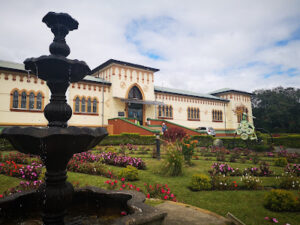
Surrounding the palace, the gardens—designed in 1854 by Jean‑Baptiste Binot under the emperor’s direction—delight visitors with around one hundred species of trees and flowers from across the globe, including exotic flora such as Madagascar banana trees, incense trees, camellias, jasmines, manacás, and “emperor flowers.” The arrangement still preserves the original landscape design with fountains, pedestals bearing busts, and the historic Frog Fountain.
The institution also supports research through its library, housing approximately fifty thousand volumes—including eight thousand rare works dating from the sixteenth to the nineteenth centuries—including manuscripts, illuminations, sheets of music, periodicals, laws of the Empire, and rare volumes annotated or owned by the imperial family. Works by foreign travellers such as Debret, Rugendas, Saint‑Hilaire, Maria Graham, Darwin, and others enrich the collection. The historical archive preserves over two hundred thousand original documents and photographs that trace Brazil’s and Petrópolis’s urban and social evolution across centuries.
The museum also offers contemporary engagement. It presents temporary art exhibitions in the palace’s right wing—for example, “Observing Art: A Look at the Pinacoteca of the Imperial Museum,” featuring 42 oil paintings from the nineteenth century across genres such as portraits, landscapes, and marine scenes, with works by artists like Edouard Vienot and Félix Émile Taunay. Educational and cultural programmes—such as heritage education, guided tours, puppet‑theatre workshops, nineteenth‑century music recitals, and a robust visual arts programme in partnership with FUNARTE—enrich the experience for all ages.
Other visitor facilities include a museum shop offering about 150 exclusive products inspired by the imperial collection—ranging from mugs and t‑shirts to bookmarks and miniatures of the imperial crown or the Golden Law pen. The complex comprises other spaces as well, including the Pavilhão das Viaturas, with nineteenth‑century vehicles, and the Sala da Batalha de Campo Grande showcasing the famous Pedro Américo painting. There is also the Pátio Lourenço Luiz Lacombe, featuring an early‑twentieth‑century locomotive.
Visitation is open from Tuesday through Sunday (and holidays falling on those days), with the park and showing hours detailed, including free entry on Wednesdays. Full access to gardens, palace, pavilions, and shop is available during opening hours.
Interesting Facts
- The Imperial Museum is housed in the former summer palace of Emperor Pedro II, built between 1845 and 1862.
- The gardens, designed in 1854, still preserve exotic species from over fifteen regions worldwide and original layout features like fountains and busts.
- The museum’s library holds around fifty thousand volumes, including eight thousand rare works—some dating back to the sixteenth century and owned by the imperial family.
- The Golden Law pen, used by Princess Isabel in 1888 to abolish slavery, is part of the collection.
- The collection includes imperial crowns and regal insignia, plus jewellery such as the August Law pen and other precious imperial gifts—including a gold‑bronze and porcelain chest gifted by the King of France to the Prince of Joinville.
- A rare only‑in‑the‑world spinet, made in 1788 by Mathias Bosten, is on display in the music hall.
- The museum’s historical archive comprises over 200 000 documents and photographs, some dating back to the thirteenth century.
- The museum is more than just a palace—it offers educational programmes, temporary art exhibitions, and cultural activities to engage diverse audiences.
Photo Gallery


Physical Location
Contact Details
Phone: +55 613 521 4455
Website: museuimperial.museus.gov.br/
Facebook: facebook.com/museuimperial/
Conclusion
The Imperial Museum in Petrópolis invites visitors into an immersive journey through Brazil’s monarchical past. With its beautifully preserved palace rooms, regal artifacts, lush historic gardens, rich library, vast archive, dynamic exhibitions, and engaging educational programs, the institution offers both enlightenment and inspiration. Whether you are a history enthusiast, an art lover, a curious traveler, or a family seeking an enriching outing, this museum offers a captivating blend of elegance, knowledge, and cultural significance. A visit to the Imperial Museum promises to be a memorable encounter with the legacy of Brazil’s imperial era.