Museo Nacional De Costa Rica

Introduction
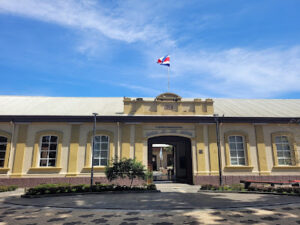
If you find yourself in San José, the capital of Costa Rica, one of the most enriching and memorable stops you can make is at the Museo Nacional de Costa Rica. Located in the heart of San José, the museum occupies the former Bellavista Military Barracks, just next to the Plaza de la Democracia. This museum offers visitors a journey through Costa Rican history, culture, nature, and identity. It is not simply a place to see old objects: it is a space where story, science, art, and heritage combine to deepen one’s understanding of what makes Costa Rica unique.


About the Museum
The Museo Nacional de Costa Rica was established in 1887 under President Bernardo Soto, with the purpose of creating a public institution to collect, study, and display both natural and artistic treasures of the country. Over the years it has occupied several buildings, but since 1950 it has been housed in the Bellavista Barracks, a former military fortress that was converted into the museum after the abolition of the army in 1948.
The museum’s mission is wide in scope: it involves education, research, preservation, and the dissemination of Costa Rica’s natural heritage, archaeology, and history. Its collections span very ancient pre‐Columbian cultures, colonial era history, Costa Rica’s natural environment, and events of modern national importance.
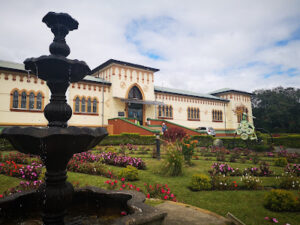
Visitors can explore permanent exhibitions, temporary exhibits, outdoor gardens, special restoration projects, and research collections. The grounds include butterfly gardens, lush green areas, and pre‐Columbian stone spheres among the garden exhibits. The building is accessible, with ramps and elevator access in some parts, and services such as a library for those interested in deeper study.
Practical information: the museum is open Tuesday through Saturday from 8:30 a.m. to 4:30 p.m., and on Sundays from 9:00 a.m. to 4:30 p.m. Admission fees vary for nationals and international visitors.
Interesting Facts
- The building where the museum is located is the former Cuartel Bellavista (Bellavista Barracks), which before becoming a museum was used for military purposes and for housing soldiers, and it carries marks of its past—bullet holes from the civil war in 1948 are still visible in its structure.
- One of the permanent exhibitions deals with Costa Rican history from the sixteenth century through the twenty-first century, showing economic, political, social, and cultural developments.
- There is a Pre-Columbian History hall, illustrating the life of indigenous peoples well before the arrival of Europeans, with artifacts such as stone tools, adornments, ceramics, and ritual objects. (Note: that hall may sometimes be closed for remodeling, so checking ahead is advised.)
- The museum’s gardens include a butterfly garden and green spaces where several of Costa Rica’s iconic pre-Columbian stone spheres are displayed.
- Visitors can see the places in the old Bellavista Barracks such as the dungeons, cells, and command houses (residences of military commanders), which have been preserved as part of the museum’s narrative about its own transformation.
- The museum supports and publishes scientific research in natural history, archaeology, and heritage protection; it also runs educational activities, virtual exhibits, and maintains a library specializing in these fields.
- The date of foundation, May four 1887, makes it one of the older national museums in Latin America, and its establishment was part of a broader project to organize and formalize national culture under ideals of order and progress.
Photo Gallery


Physical Location
Contact Details
Phone: +50 62 211 5700
Website: museocostarica.go.cr/
Facebook: facebook.com/museonacional.mcj.cr/
Conclusion
The Museo Nacional de Costa Rica is much more than a repository of relics. It is a living tribute to the intersection of past and present in Costa Rica. Whether you are fascinated by ancient indigenous cultures, colonial history, natural science, or the story of how Costa Rica came to be the country it is today, this museum offers something profound. The fact that it is housed in a building that itself is a part of Costa Rica’s story adds emotional weight to the visit.
For students, scholars, families, and travelers alike, the Museo Nacional is a place to reflect on identity, resilience, biodiversity, and culture. Before you go, check whether special exhibitions are on display, whether certain halls are temporarily closed, and whether there are guided tours in your preferred language. Visiting the museum will deepen your understanding of Costa Rica in both visible and subtle ways—and leave you with a richer sense of this vibrant nation.