Museo Nazionale di Castel Sant’Angelo

Introduction
Rising majestically along the banks of the Tiber River, the Museo Nazionale di Castel Sant’Angelo in Rome, Italy, offers visitors a unique blend of ancient Roman history, military architecture, and papal legacy. This iconic cylindrical structure, originally built as a mausoleum for Emperor Hadrian in the second century, has stood the test of time and transformed over the centuries into a fortress, papal residence, prison, and now a fascinating museum.
Located just a short walk from Vatican City, Castel Sant’Angelo invites travelers into its centuries-old walls for an immersive journey through Roman and Renaissance history. With its panoramic rooftop views, intricate frescoes, historical artifacts, and secret passageways, the museum offers an unforgettable experience that appeals to lovers of history, art, and architecture alik

About the Museum
The Museo Nazionale di Castel Sant’Angelo tells the remarkable story of a building that has continuously evolved to serve the needs of the city and the papacy. Originally constructed between 123 and 139 under Emperor Hadrian as his monumental tomb, the structure was later repurposed into a military fortress during the Middle Ages. Its strategic location near the Vatican made it an ideal stronghold, and in the sixteenth century, it became a refuge for popes during times of danger, connected to the Vatican by the famous Passetto di Borgo, a fortified corridor.
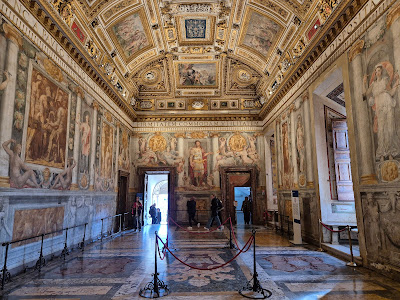
Today, the museum presents a well-curated collection that showcases its multifaceted history. Visitors can explore the original Roman mausoleum remains, papal apartments adorned with Renaissance frescoes, weapons and armor displays, and prison cells that once held notable figures. Each floor of the structure reveals a different era of its history, culminating in a terrace that offers one of the most breathtaking views over the city of Rome, including St. Peter’s Basilica and the Tiber River.
The museum’s ambiance is both grand and mysterious, with winding staircases, stone corridors, and ornate halls reflecting the passage of time. The careful preservation of the structure and its artistic embellishments ensures that every visitor gains a deep appreciation for the layered history of Rome and the role this fortress played in shaping it.
Interesting Facts
- Built as Emperor Hadrian’s mausoleum: Originally designed as a monumental tomb, it later became a fortress, palace, and museum.
- Connected to the Vatican: The Passetto di Borgo is a secret elevated corridor linking the castle to the Vatican, used by popes in times of danger.
- Once used as a prison: The castle’s lower levels housed cells where political prisoners, including philosopher Giordano Bruno, were held.
- Decorated with Renaissance art: The papal apartments feature stunning frescoes and decorations commissioned by Renaissance popes.
- Panoramic views of Rome: The terrace at the top offers one of the best viewpoints in the city, with sweeping views of the Roman skyline.
- Inspired by angelic visions: According to legend, Archangel Michael appeared atop the mausoleum to signal the end of a plague, inspiring the addition of the angel statue and the name “Castel Sant’Angelo.”
Photo Gallery


Physical Location
Contact Details
Phone: +39 06 6819 111
Website: castelsantangelorome.com/
Conclusion
A visit to the Museo Nazionale di Castel Sant’Angelo is a journey through nearly two thousand years of Roman history. From its imperial origins as a grand tomb to its later life as a fortress and papal refuge, the castle encapsulates the spirit of resilience and transformation that defines the Eternal City. Whether you are fascinated by ancient architecture, intrigued by papal intrigue, or simply eager to see one of the best views in Rome, Castel Sant’Angelo offers a rich and rewarding experience. This museum is not just a building—it is a monument to the enduring legacy of Rome’s past and a must-see destination for any traveler to Italy.