Palace of Shaki Khans
Introduction
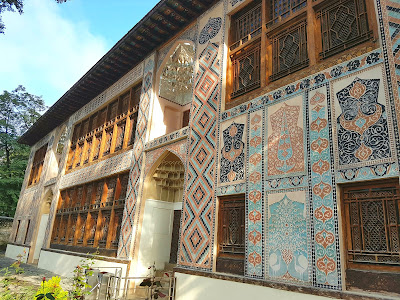
Nestled in the vibrant city of Sheki in northwestern Azerbaijan, the Palace of Sheki Khans serves as a stunning reminder of the region’s rich cultural tapestry. This exquisite museum, located within the historic centre that UNESCO inscribed as a World Heritage Site in July 2019, welcomes travellers from around the globe. Visitors are invited to explore its opulent halls, bask in the beauty of its stained‑glass windows, and immerse themselves in centuries of artistry and architectural innovation.


About the Museum
The Palace of Sheki Khans was originally constructed in 1797 as a summer residence for Muhammad Husayn Khan Mushtaq of the Sheki Khanate. Made without a single nail or drop of glue, its structure relies on ancient construction techniques using raw brick, river stones, laminated wood, and special natural adhesives. Overlooking the Kish River amid forested slopes of the Greater Caucasus Mountains, the building blends seamlessly with its dramatic natural setting.
Restored extensively between 2002 and 2004—with prior structural conservation carried out in the mid‑twentieth century—the palace has been carefully preserved to reveal its former glory. Its two‑storey design features three rectangular rooms per level, connected by south‑facing iwans (porticos) that open onto scenic views. The palace once formed the core of a larger fortified complex, complete with gardens, fountains, pools, and servants’ quarters.
Step inside to discover richly frescoed walls depicting flowers, hunting scenes, royal emblems, and epic motifs drawn from Persian poetry. Ornamental craftsmanship abounds: from mirror‑fragments and gilded muqarnas hoods over the iwans to the iconic shebeke—intricate stained‑glass latticework assembled without glue or nails. These features reflect Persian, Ottoman, and Qajar influences framed by the local Azerbaijani tradition.
Interesting Facts
- No nails, no glue: The palace’s structural elements hold together using a long‑lost, natural bonding mixture.
- Stained‑glass marvel: The shebeke windows—without any metal fasteners—feature hundreds of multicoloured glass pieces fitted into wooden lattice frames.
- Decorative artistry: Frescoes feature floral baskets, flying birds, royal coats of arms, hunting and battle scenes, and stories drawn from Persian poet Nizami Ganjavi.
- Summer palace remains: It is the only surviving section of what was once a much larger palace complex, including a winter residence and living quarters for the extended khan’s household.
- UNESCO World Heritage: Inscribed in 2019 along with Sheki’s historic centre, the palace exemplifies the city’s famed “garden‑city” layout—where homes, orchards, mills, and water canals form a harmonious ensemble.
Photo Gallery
Physical Location
Contact Details
Website: iwh.icesco.org/shekis-palace/
Facebook: facebook.com/pages/Palace%20of%20Shaki%20Khans/138536906175199/#
Conclusion
The Palace of Sheki Khans is more than a museum—it is a living treasure, harmoniously blending architectural ingenuity with artistic splendour. From its sublime stained‑glass lattices and frescoed halls to its idyllic mountainous setting, every corner tells a story of regional craftsmanship and imperial splendour. Whether you are drawn to history, art, or natural beauty, a visit to this palace offers a vivid journey through Azerbaijan’s cultural heritage. If you find yourself in Sheki, stepping into the palace promises an unforgettable experience that celebrates timeless elegance and historical resonance.