Qabala Archaeological Center

Introduction
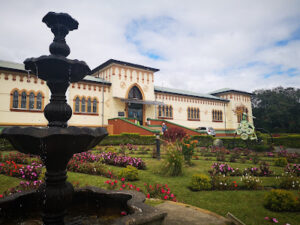
The Qabala Archaeological Center, located near the village of Chukhur‑Gabala in Qabala District, Azerbaijan, presents an immersive journey into the ancient history of Gabala, once the capital of Caucasian Albania. Set amidst lush landscapes at the confluence of the Garachay and Jorlu rivers, the center invites curious visitors from around the world to explore its rich archaeological heritage through modern exhibits and on‑site excavation areas.


About the Museum
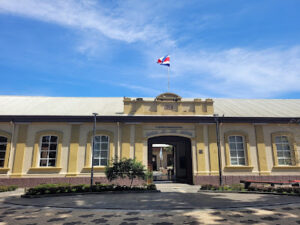
The Qabala Archaeological Center opened in September 2014, built through collaboration between Azerbaijani and Korean archaeologists under the cultural‑exchange program SEBA — a partnership aimed at uncovering Gabala’s deep history. The facility occupies a three‑storey building housing two exhibition halls, a restoration laboratory, an archaeological fund, a conference hall with interpretation equipment, a library, and workspaces for researchers and expedition teams. The office of the Gabala State Historical‑Artistic Preserve also operates within the same premises.
The exhibitions feature approximately fifteen hundred artefacts discovered during ongoing excavations in the ancient town, and the adjacent areas of Salbir and Gala. Every object is restored using advanced techniques in the center’s laboratory before being displayed to the public. Visitors may also enjoy guided tours led by knowledgeable staff who explain the significance and context of the finds, placing them in the broader history of Gabala’s long‑standing role as a trade, administrative and cultural centre.
Beyond the indoor galleries, the center is set within a broader archaeological zone where visitors can view active excavation sites nearby. These sites include remains of fortified walls, large public buildings, pottery kilns, remnants of water‑supply infrastructure, and burial structures dating across centuries of continuous occupation.
Interesting Facts
- The center displays coins not only from local Caucasian Albanian issues but also from Alexander the Great, Hellenistic rulers, Parthian, Roman and Sassanid periods, highlighting the city’s long‑distance trade links.
- Among the most striking exhibits is the reconstructed pair‑burial grave, featuring a couple buried together approximately eighteen hundred to nineteen hundred years ago. The reconstruction allows visitors to observe this rare funerary ritual within its archaeological context.
- The site includes massive oval public buildings uncovered at ancient Salbir, possibly used for ceremonial, administrative or religious gatherings. These buildings date back to the third and second centuries before the Common Era and are unique in the region for their form and scale.
- Excavations in a large subterranean storehouse dating to the fourth‑third centuries before the Common Era revealed nearly two hundred forty earthenware jars filled with foodstuffs such as wine, grain, nuts and other produce—suggesting state‑level provisioning or urban storage systems.
- The archaeological mission is ongoing year after year, and the exhibition is regularly updated as new finds are recovered and conserved.
Photo Gallery


Physical Location
Contact Details
Phone: +99450 747 1011
Website: qebele-ih.gov.az/en/qebele-arxeoloji-merkezi.html
Facebook: facebook.com/profile.php?id=100067426930977#
Conclusion
The Qabala Archaeological Center stands as a remarkable destination for visitors seeking to connect with Azerbaijan’s ancient past in a thoughtful and engaging setting. Rather than merely viewing artefacts behind glass, visitors have the opportunity to walk through excavation zones, learn from expert guides, and watch active research unfold. The center provides an excellent balance of accessible displays, scientific rigour, and cultural insight. Whether you are a history enthusiast, a family on holiday, or a curious traveller, the center offers a rich experience that brings to life the legacy of ancient Gabala, once a pivotal hub of politics, trade and civilisation in the Caucasus.