Topkapı Palace

Introduction
Topkapı Palace, located in the historic Sarayburnu district of Istanbul on the tip of the peninsula between the Sea of Marmara and the Bosphorus, is one of the most magnificent and culturally rich museums in Turkey. Once the residence and administrative heart of the Ottoman sultans for nearly four centuries, today it welcomes millions of visitors eager to explore its grand courtyards, ornate chambers, priceless collections, and serene gardens.

About the Museum
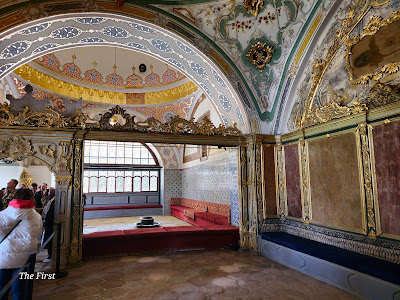
Topkapı Palace was begun by Sultan Mehmed the Conqueror in the late fifteenth century and served successive Ottoman rulers until the mid-nineteenth century. Since being declared a museum in April 1924, it has been administered by Turkey’s Ministry of Culture and Tourism. Visitors today can explore its primary courtyards, the intricate Harem, the Imperial Council chambers, and much more.
- Courtyards and Architecture: The palace unfolds through four successive courtyards, each offering a different experience—from the public bustle of the First Court and Hagia Irene church to the private splendor of the Third and Fourth Courts, surrounded by terraces and kiosks overlooking the Bosphorus.
- Harem: Accessed with a separate ticket, the Harem encompasses over three hundred rooms, including the Baths of the Sultan and Queen Mother, ceremonial halls, and private chambers. This secluded area reflects the domestic architecture and daily life of the imperial family.
- Treasury and Collections: The Imperial Treasury, or “Hazine,” displays Ottoman craftsmanship at its finest. Highlights include the Spoonmaker’s Diamond (approximately eighty‑six carats), the bejeweled Topkapı Dagger gifted by Nader Shah, and opulent robes, porcelain, and ceremonial objects.
- Sacred Relics: In the Privy Chamber lies one of the most spiritually important collections in the Muslim world—the Sacred Relics of the Prophet Muhammad and other revered figures. Visitors can see the Holy Mantle, Prophet’s sword, bowl, turban, and other objects deeply venerated by Muslims.
- Library and Schools: Sultan Ahmed III’s library, built in 1718, houses manuscripts and reflects exquisite Ottoman art in calligraphy, tilework, and woodcarving. The palace also housed educational institutions such as the Enderun school for imperial service training.
Interesting Facts
- Built by Mehmed the Conqueror between 1460 and 1478, the palace once housed up to four thousand inhabitants.
- The palace kitchen contained over twelve thousand pieces of porcelain; legend says the Chinese celadon ware would change color if poison was present.
- The Spoonmaker’s Diamond, weighing eighty‑six carats, was acquired in 1669 in Istanbul and remains one of the world’s most famous gems.
- The Library of Sultan Ahmed III features Sultan’s own poem carved on its walls, offering both art and spiritual reflection.
- The Tower of Justice provided the sultan with a view of the Imperial Council; he could observe proceedings without being seen through a golden grille.
Photo Gallery


Physical Location
Contact Details
Phone: +90212 512 0480
Website: muze.gen.tr/muze-detay/topkapi
Facebook: facebook.com/museumpassistanbul
Conclusion
Topkapı Palace Museum offers an immersive journey through the Ottoman Empire’s most intimate spaces. Every step—from its storied courtyards and secluded Harem chambers to the dazzling treasures and sacred relics—reveals layers of history, artistry, faith, and power. With stunning views of the surrounding sea and Istanbul’s skyline, the palace transcends its role as a museum to become a living testament to centuries of cultural achievement. Whether you are drawn by imperial grandeur, religious heritage, architectural elegance, or pure scenic beauty, a visit to Topkapı Palace promises to be a highlight of your trip to Istanbul.