Istanbul Archaeological Museum

Introduction
The Istanbul Archaeological Museum, located on Osman Hamdi Bey Yokuşu Street in the Sultanahmet district of Istanbul, Turkey, is one of the nation’s premier cultural treasures. Nestled near Gülhane Park and just a short walk from Topkapı Palace, this remarkable complex offers visitors an extraordinary journey through millennia of human history and art. From ancient Anatolia to the Ottoman era, guests are invited to explore a vast and diverse collection of artefacts in a beautifully curated setting.

About the Museum
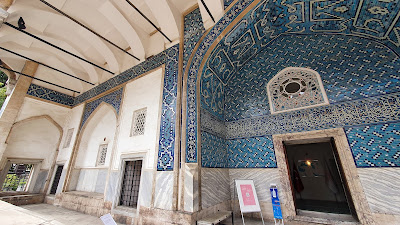
The museum’s roots date back to 1869, when the first imperial collection—then known as the Imperial Museum—was established in the Hagia Irene Church. As the collection grew, the Zhengli Pavilion, also called the Tiled Kiosk and built in 1472 under Sultan Mehmet II, was added in 1880 to house artefacts, especially Ottoman and Seljuk ceramics.
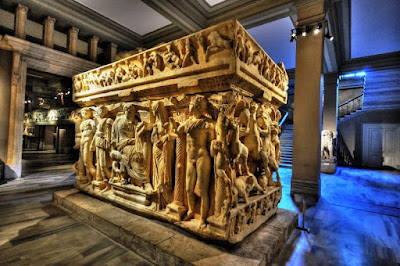
Under the visionary leadership of Osman Hamdi Bey, appointed director in 1881, the museum experienced major developments. He led excavations at Mount Nemrud, Myrina, Kyme, Lagina, and especially Sidon (modern-day Lebanon), bringing back spectacular sarcophagi including the famed Alexander Sarcophagus. In 1891, the neo‑classical main building, designed by Alexandre Vallaury and adorned with a pediment bearing the Ottoman inscription “Asar‑ı Atika Müzesi,” was inaugurated.
Today, the museum complex comprises three main sections:
- The Archaeological Museum (main building), housing Hellenistic, Roman, Byzantine and Anatolian artefacts
- The Museum of the Ancient Orient, with Mesopotamian, Egyptian, Hittite, Anatolian, Syrian and Palestinian collections
- The Tiled Kiosk Museum, dedicated to Ottoman and Seljuk tiles and ceramics
Interesting Facts
- World‑famous sarcophagi
- The Alexander Sarcophagus, believed to belong to Abdalonymus, King of Sidon, is masterfully carved and richly decorated.
- Other important sarcophagi from Sidon include the Sarcophagus of the Mourning Women, the Tabnit, the Satrap, and Learian pieces.
- Ishtar Gate fragments
- Glazed brick reliefs from Babylon’s iconic Ishtar Gate, depicting lions, dragons and bulls, are prominently displayed.
- Oldest known peace treaty
- A cuneiform tablet bearing the Egyptian–Hittite peace treaty from around 1258 BCE is exhibited—this is the earliest preserved international peace agreement.
- Ancient love poem and oldest law code
- A clay tablet inscribed with a Sumerian love poem from Nippur (Iraq) and fragments of the Code of Ur‑Nammu—some of the earliest known laws—can be found in the Museum of the Ancient Orient.
- Impressive collection scale
- The museums preserve over a million objects, ranging from prehistoric artifacts to Islamic ceramics.
- Three distinct historic buildings
- The Tiled Kiosk (1472) is an exquisite example of Persian‑influenced Ottoman architecture with ornate Iznik tiles.
- The Museum of the Ancient Orient building, originally an academy of fine arts (1883), was transformed into a museum in 1935.
- The Classical Building (1891) stands as one of the world’s earliest purpose‑built museum structures.
Photo Gallery


Physical Location
Contact Details
Phone: +90212 520 7740
Website: muze.gov.tr/muze-detay?SectionId=IAR01&DistId=IAR
Facebook: facebook.com/p/Istanbul-Archaeological-Museum-100063548225193/
Conclusion
The Istanbul Archaeological Museum is a captivating destination that brings the ancient world to life. Visitors can trace the evolution of human civilisation—from the earliest written laws and Sumerian love poems to elaborate sarcophagi and exquisite Islamic ceramics—all within buildings that are themselves historical masterpieces. Whether you are a history enthusiast, an art lover, or a casual tourist, the museum offers an unforgettable cultural experience in one of Istanbul’s most atmospheric settings. Your journey through time starts here—immerse yourself in the stories of our shared past.