Memorial Complex Brest Hero-Fortress

Introduction
The Memorial Complex Brest Hero‑Fortress, located in the city of Brest in the Republic of Belarus, stands as a powerful tribute to the defenders of the fortress during the Second World War. It is sited at the meeting point of the Bug and Mukhavyets rivers on the grounds of the nineteenth‑century fortress. This site has been transformed into a monumental memorial and museum dedicated to courage, sacrifice, and remembrance. It offers visitors a deeply moving experience that brings into focus the tragic and heroic history of the Brest Fortress.


About the Museum
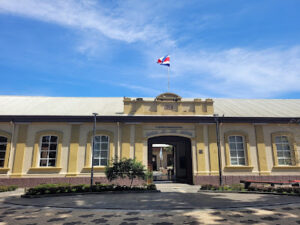
The centrepiece of the memorial complex is the Museum of the Defence of Brest Fortress, housed in former barracks at the heart of the citadel. The museum opened in November 1956 with three exhibition halls and was expanded in 1961 to nine halls. Today it covers approximately 1 270 square metres and features ten exhibition halls with around four thousand exhibits drawn from local and national collections.
Visitors enter through the Ceremonial Square, flanked by monumental sculptures and leading to the museum building. Inside, the exhibits are arranged thematically: the early history of the Brest‑Litovsk fortress in the nineteenth and early twentieth centuries; the interwar period when Brest was part of Poland; and the dramatic first days of the Great Patriotic War in June and July 1941. Artifacts include personal belongings, military uniforms, weapons, documents, letters, photographs and fragments of shells. A symbolic alarm clock recovered from the Terespol fort is displayed as the symbol of the moment when war began.
The museum is part of a broader open‑air ensemble built in the late 1960s and early 1970s, officially opened in September 1971. The ensemble includes several monumental features: the 33.5‑metre high “Courage” monument, the 100‑metre Bayonet Obelisk, sculptural compositions such as “Thirst”, Kholm Gate with its bullet‑scarred facade, ruins of the White Palace, the St. Nicholas Orthodox Church and other fortifications.
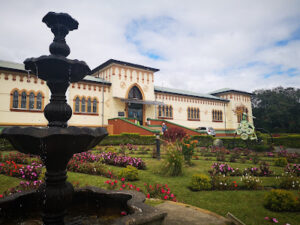
Outdoors, visitors can walk the wide paths through Ceremonial Square, pass by the eternal flame guarded by an honour post, and reflect at the engraved walls and tombstones of the necropolis that holds remains of known and unknown defenders. The grounds are beautifully arranged with plantings and atmospheric lighting, especially evocative in the evenings.
The complex also includes a branch museum at Fort Number Five, just three kilometres from the central site. This fort has been turned into a museum showcasing military‑engineering architecture, photographic exhibitions of fortress construction, Great Patriotic War artillery and life‑size reconstructions of soldier life and defence preparations. Visitors may explore casemates, underground galleries and fortified passages to gain immersive insights into late nineteenth and early twentieth century fortifications.
Interesting Facts
- The Brest Fortress held out against German forces for several weeks—although surrounded and outnumbered, its defenders continued resistance well into July 1941.
- In 1965 it was officially awarded the honorary title “Hero Fortress” by decree of the Presidium of the Supreme Soviet of the USSR, and was also awarded an Order of Lenin and a Gold Star medal, all of which are preserved in the museum.
- The monumental “Courage” sculpture is 33.5 metres high and was created between 1968 and 1971 by sculptor Alexander Kibalnikov and his team of Soviet artists and architects.
- The Bayonet Obelisk rises to 100 metres and is linked visually to the main monument through rows of tombstones that symbolise the defenders who lost their lives here.
- Among the most emotional elements is the sculpture “Thirst”, depicting a wounded defender trying to drink from the river—this sculpture commemorates the desperate struggle for water by the defenders under fire.
- Over six hundred thousand tourists visited the complex in 2024, drawn from more than twenty‑five countries, and more than twelve thousand guided tours were conducted throughout the year.
- In addition to exhibitions and museum tours, the site hosts events such as historical lectures, film screenings, patriotic ceremonies on Victory Day and the anniversary of the fortress defence, and performances such as an “Emotional Diary of Memory” on the Ceremonial Square.
Photo Gallery


Physical Location
Contact Details
Phone: +37516 225 4274
Website: belarus.by/en/travel/belarus-life/brest-fortress
Conclusion
A visit to the Memorial Complex Brest Hero‑Fortress offers a deeply respectful and immersive encounter with history. From the museum halls rich with personal stories and wartime relics, to the monumental sculptures and poignant Ruins of barrack blocks, the site communicates the bravery and sacrifice of the defenders. Whether viewed from the viewpoint of historical education or emotional reflection, the complex leaves a lasting impression.
Visitors can explore both the central citadel and the Fort Number Five to gain a full perspective on military engineering, wartime resilience, and the cultural memory preserved here. The landscaped grounds, evocative monuments, and the atmosphere of solemn remembrance ensure that no one leaves the site untouched by the power of its message.
For those seeking to understand the dramatic opening chapter of the Great Patriotic War and to pay tribute to those who stood their ground despite impossible odds, the Memorial Complex Brest Hero‑Fortress is an essential destination.