Museu do Amanha

Introduction
The Museu do Amanhã, also known in English as the Museum of Tomorrow, is located in the waterfront area of Rio de Janeiro, Brazil, at Praça Mauá, number one, in the Centro district of the city. This striking science and culture museum invites visitors into a visionary exploration of our shared future. Through thought‑provoking exhibitions and immersive environments, the museum inspires curiosity and reflection on how our choices today shape the world of tomorrow.

About the Museum
The Museu do Amanhã is guided by two central values: sustainability and coexistence. Its mission is to stimulate new perspectives, spread scientific advances, and disseminate the planet’s vital signs—encouraging reflection and action toward building the future we desire. Housed in a two‑storey architectural masterpiece at Pier Mauá, the museum opened in December 2015 as part of the revitalization of Rio de Janeiro’s port area, and was conceived with support from the Roberto Marinho Foundation.
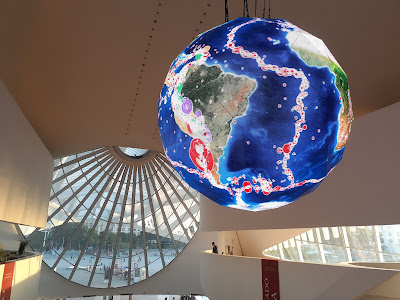
Its main exhibition, titled “From Cosmos to Us,” presents a multimedia narrative structured into five thematic areas: Cosmos, Earth, Anthropocene, Tomorrows, and Us. This sequence includes a wealth of experiments and sub‑experiences—27 full experiments and 35 sub‑experiences—available in Portuguese, Spanish, and English. The Cosmos section delves into our origins and our connection with the universe, prompting foundational questions about existence. In the Earth section, three imposing seven‑metre cubes represent matter, life, and thought, with imagery that highlights biodiversity and interconnectedness.
In the Anthropocene area, the exhibition reveals how human activity has become a geological force, altering climate, biodiversity, and landscapes, with immersive visuals that provoke awareness and reflection. The Tomorrows area encourages visitors to consider global trends—urban growth, hyperconnectivity, cultural diversity—and invites them to envision sustainable futures. Interactive games, including one that simulates management of planetary resources over the next fifty years and another that explores individual human traits, deepen engagement.
The journey culminates in the Us area, where imagination and self‑reflection merge. Here, visitors encounter a central museographic object—a two‑metre wooden churinga of Australian indigenous origin—within a hut‑like installation that simulates sunrise and sunset. The piece symbolizes the link between past, present, and future, and underscores that tomorrow begins with the decisions we make today.
Visitors can also enjoy other museum amenities: a café that operates during opening hours, free Wi‑Fi access (via registration on the “Museu do Amanhã” network), bicycle racks in the outdoor gardens, and inviting green spaces ideal for a snack or picnic. Photography is permitted throughout most of the museum—except in the Cosmos area—and visitors are gently encouraged to share their experience on social media using the hashtag #museudoamanha.
Interesting Facts
- The main exhibition unfolds across five narrative areas—Cosmos, Earth, Anthropocene, Tomorrows, and Us—and includes 27 experiments and 35 sub‑experiences available in three languages.
- In the Earth section, three towering seven‑metre cubes represent matter, life, and thought; one cube’s exterior evokes DNA, and its interior presents the diversity of the Atlantic Forest based on specially commissioned expedition photographs.
- The Anthropocene area features six luminous ten‑metre pillars that display videos and data on human impacts on Earth, arranged in a circular formation to surround and immerse the visitor.
- The Tomorrows section incorporates interactive games: one tasked with managing planetary resources over fifty years, and another that helps visitors discover their own “type” of human, both designed to personalize engagement with sustainability themes.
- The Us section includes the museum’s only physical exhibit piece—a two‑metre churinga crafted in wood, discovered in a Paris antiquarian shop. This sacred Australian Aboriginal object symbolizes continuity across time, reinforcing the idea that the future emerges from our present choices.
- The museum embraces sustainability beyond its exhibits. Its design harnesses greenhouse gas‑friendly materials, incorporates solar energy, uses water from Guanabara Bay for cooling and water features, and embodies a new generation of science museums—what is termed “third‑generation,” focused on ideas and future trajectories rather than objects alone.
- Visitors are provided with thoughtful amenities: free internet access, a welcoming café, bicycle parking, and scenic gardens. Photography is encouraged (with minimal restrictions) to capture and share the experience.
Photo Gallery


Physical Location
Contact Details
Phone: (21) 3812-1800
Website: museudoamanha.org.br/
Facebook: facebook.com/museudoamanha/
Conclusion
The Museu do Amanhã offers more than a visit—it offers an experience that encourages reflection, curiosity, and hope. From standing inside the Cosmos dome to engaging in imaginative games about our future, to contemplating the churinga in a quiet Indigenous‑inspired hut, visitors are guided through a sensory and intellectual journey grounded in science, art, and sustainability. Its visionary architecture, commitment to dialogue, and thoughtful integration of technology and design make it not only a highlight of Rio de Janeiro’s cultural landscape but also a global example of how museums can inspire collective awareness and action.
Whether you care deeply about the fate of our planet, love immersive learning experiences, or simply seek inspiration, this museum invites you to explore, question, and imagine—inviting each of us to play a role in building a tomorrow worth living in.